When you are looking for a corporate video production agency, is a strong portfolio enough to make the decision?
The first thing most teams notice is visual quality. Clean camera work, polished color, sharp subtitles, and a modern editing style all matter. But once the project actually begins, many clients realize that the bigger difference is often in the planning process, communication style, revision structure, and how usable the final files are after delivery.
Choosing a corporate video production agency is not just about finding a team that can shoot beautiful footage. It is about finding a partner who can understand your message, manage the production day calmly, and deliver video assets that your team can actually use across websites, sales decks, recruitment, events, and social channels.
In short, a strong corporate video production agency should help you define the message, clarify the production scope, plan the filming setup, guide the editing and review process, and deliver final files in formats your team can reuse. For global PR agencies and overseas corporate teams planning projects in Seoul or Korea, the key is not only how impressive the reel looks, but whether the production team understands corporate communication, event context, and downstream usage.
In a previous article, we covered how event videos are produced through a four-stage process. In this guide, we will step back and look at what clients should check before choosing a video production partner.
1. Before looking for an agency, define what the video needs to say
Before you search for a corporate video production agency, the first decision is not the budget or filming date. It is what the video needs to communicate.

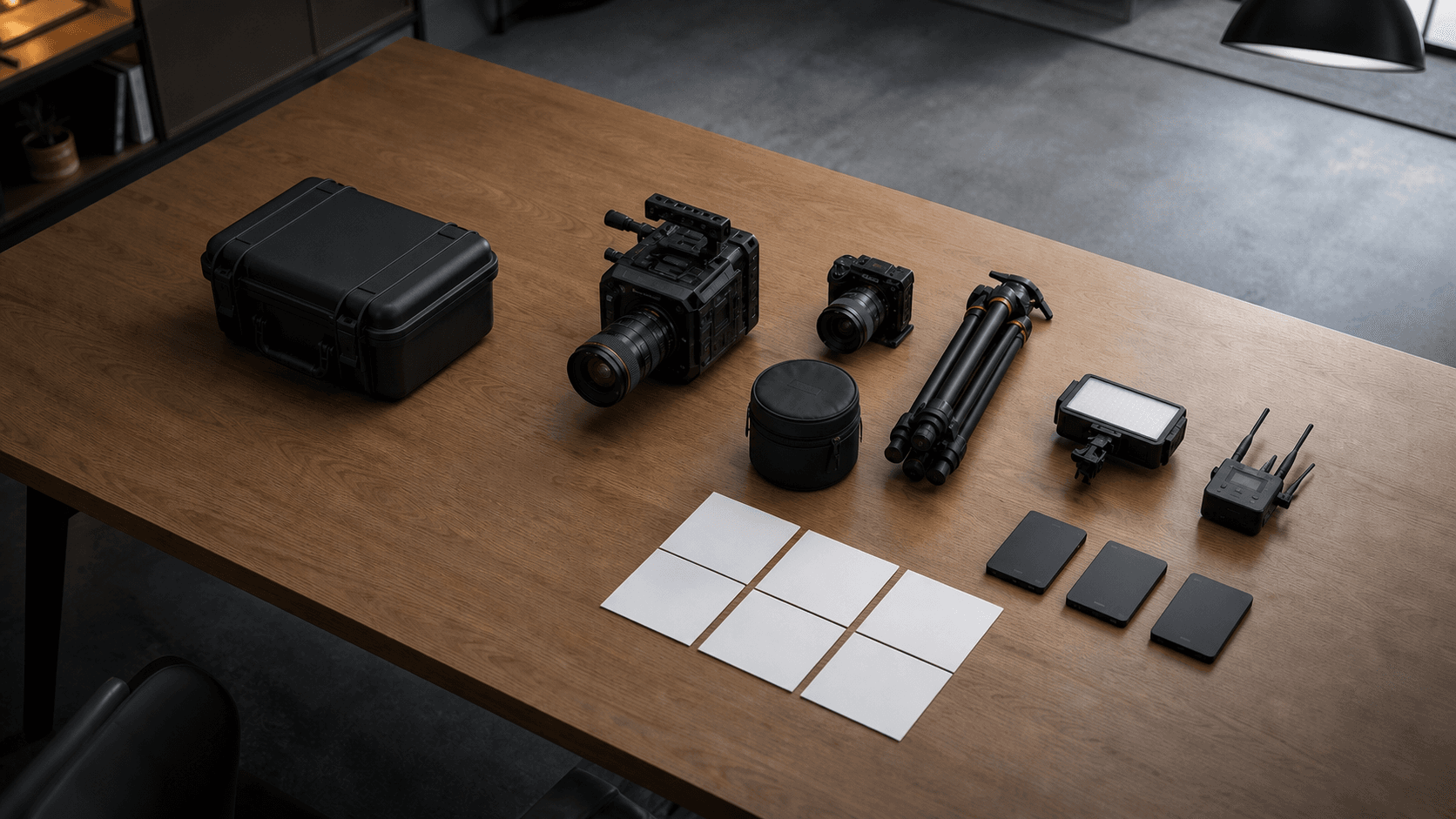
홍보영상은 촬영 전에 메시지와 활용처를 함께 정리할수록 방향이 선명해집니다. (이해를 돕기 위한 AI 생성 이미지 입니다)
Many projects begin with a simple request: “We need a company introduction video.” But that phrase can mean many different things.
- Do you want to build trust on the first screen of your website?
- Do you need to explain a product or service during sales meetings?
- Are you trying to show company culture for recruitment?
- Do you need to communicate vision to investors or partners?
- Will the video be reused as follow-up content after an event?
Even if the format is called a corporate video, the filming plan changes depending on the purpose. A CEO interview may be the center of the video. In another case, event recap footage, product usage scenes, customer voices, or workplace atmosphere may matter more.
A good agency will not begin by asking only, “How long should the video be?” A better first question is, “What should people understand or feel after watching it?” That question turns the video from a collection of nice shots into a piece of communication.
2. Review portfolios by relevance, not only visual polish
A portfolio is important, of course. But the way you review it matters.

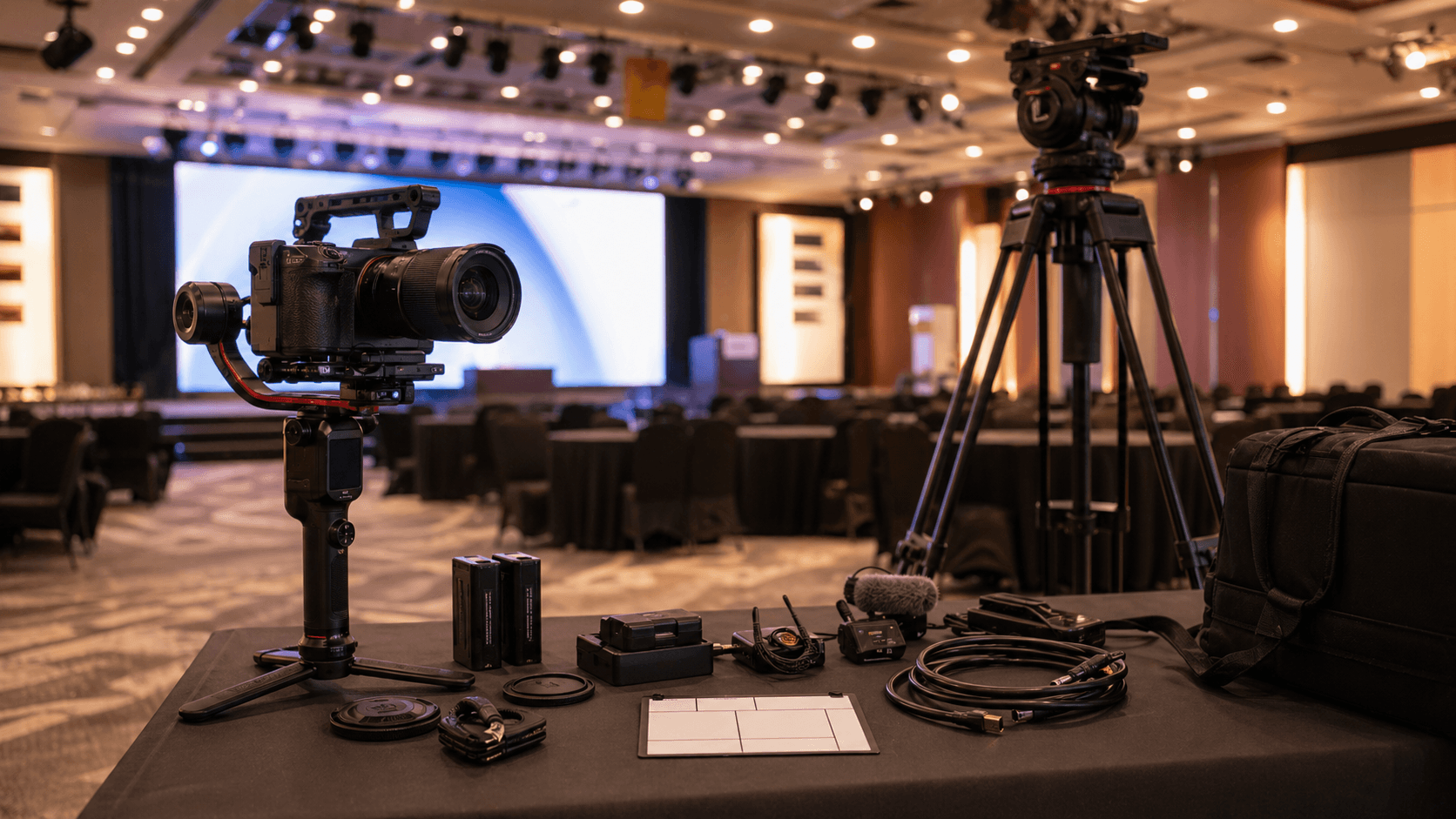
포트폴리오는 화려함보다 우리 상황과 비슷한 제작 경험을 기준으로 보는 것이 좋습니다. (이해를 돕기 위한 AI 생성 이미지 입니다)
Instead of choosing the most visually impressive video, it is often more practical to look for work that was created under conditions similar to yours.
You may want to check:
- Whether the agency has worked with a similar industry or organization size
- Whether they have experience with interview-led corporate videos
- Whether they can handle event, conference, or on-site production environments
- Whether they can make limited office spaces look natural on camera
- Whether the delivered video feels usable for websites, sales, social, or internal communication
A portfolio may look impressive but still be closer to advertising, music video, or entertainment work. That does not always translate well to a calm corporate communication piece. On the other hand, a less flashy video may be more effective if the interview flow feels natural and the company’s credibility comes through clearly.
If your video includes interviews, it is worth checking whether the agency has real experience with corporate interview video production. Interview videos are shaped not only by camera settings, but also by question design and how comfortable the subject feels on site.
3. Separate planning, filming, editing, design, and delivery scope
When reviewing a quote, be careful with vague items such as “video production package.” It may look simple, but it can be hard to know what is actually included.

기획·촬영·편집·납품 범위를 나눠 확인하면 제작 중 오해를 줄일 수 있습니다. (이해를 돕기 위한 AI 생성 이미지 입니다)
During the first discussion, it helps to separate the scope into clear areas.
| Area | What to check |
|---|---|
| Planning | Concept proposal, structure, interview questions, shot flow, production schedule |
| Filming | Crew size, number of cameras, lighting, audio setup, filming hours |
| Editing | First draft, subtitles, color correction, audio cleanup, revision rounds |
| Design | Title graphics, lower thirds, logo animation, motion graphics, thumbnails |
| Delivery | Master file, short clips, vertical versions, internal sharing files, social cuts |
This makes the project easier for both sides. The agency can understand what needs to be prepared, and the client can explain the production scope internally without guessing.
Corporate videos are rarely used only once. They often move between website pages, sales decks, social posts, hiring pages, internal reports, and event follow-up emails. As we discussed in our post-delivery video usage guide, the best time to plan usage is before filming begins.
4. Quote differences usually come from people, timeline, and revisions
Many clients assume that video production quotes differ mainly because of equipment. Cameras, lighting, and audio tools are important, but the larger cost differences usually come from the crew, filming time, pre-production scope, editing complexity, and revision process.
Even for the same two-minute corporate video, the cost structure can change depending on whether:
- The video includes only one executive interview or multiple employees and clients
- The filming can be completed in one location or requires multiple locations
- The agency needs to develop the script and interview questions
- The edit requires motion graphics, detailed subtitles, or branded design elements
- You need vertical clips, short edits, or multiple usage versions
- The internal approval process may require several rounds of revisions
So when comparing quotes, it is better to look beyond the total amount and ask what is included. A lower quote is not automatically bad, and a higher quote is not automatically better. The important question is whether the quote reflects the level of work needed to create the result your team expects.
It also helps to separate a possible setup from an ideal setup. Some projects can be done with a lean crew, but if there are many interviews, several filming locations, or a tight approval process, the project will naturally require more planning and editing time. An agency that explains those limits clearly at the beginning is often easier to work with later.
5. Seven questions to ask in the first meeting
The first meeting is not only a place to ask, “Can you make this well?” It is a chance to understand how the agency works.
These seven questions can help you check the fit in a practical way.
- Have you produced videos for a similar industry, purpose, or audience?
- How far do you support planning, structure, and filming preparation?
- How many people are usually on site, and what does each person handle?
- If interviews are included, how do you prepare the questions and talking points?
- When can we usually expect the first edit?
- How are revisions handled, and how many rounds are included?
- Can you deliver short versions, vertical cuts, thumbnails, or other practical assets beyond the master file?
These questions are not meant to pressure the agency. They help both sides confirm that they are looking at the same picture. When expectations are aligned early, fewer misunderstandings happen during production.
6. Communication style is part of the final quality
Corporate video production does not finish with filming and editing alone. Inside the client team, several people may review the video, share feedback, request changes, and coordinate approvals.

피드백 기준과 납품 버전이 정리되어 있으면 결과물을 더 안정적으로 활용할 수 있습니다. (이해를 돕기 위한 AI 생성 이미지 입니다)
That is why communication matters.
A good agency makes it easier for the client to give feedback. For example, when sending the first edit, it helps to explain what to review: overall tone, subtitle wording, scene order, logo placement, music feel, or message clarity. This makes internal review much smoother.
Without that guidance, feedback can become scattered. One person comments on subtitles, another on music, another on who appears in the frame. The revision process becomes longer, and the core message can become less clear.
When choosing an agency, it is worth paying attention to whether communication feels organized and comfortable.
- Do they explain the overall process and expected timeline in a realistic way?
- Do they summarize what your team needs to prepare before filming?
- Do they guide what to look for when reviewing the edit?
- Do they make revision communication easy to manage?
- Do they deliver final files in a way your team can use without extra work?
In corporate video projects, trust is built not only through the final output, but through the way the project is handled.
7. If events, interviews, and promotional videos connect, check one-stop experience
Corporate video projects often connect with more than one format. A company may need event recap footage, executive interviews, customer interviews, conference highlights, and short social clips from the same production day.
If the filming team, interview team, editing team, and event operations team all work separately, the client often has to coordinate everything in the middle. When one team understands the full flow, filming, editing, and delivery become much simpler.
MOTIONSENSE works across event operations, livestreaming, corporate interviews, event recap videos, and promotional video production. That means we do not only arrive with cameras. We look at where the video comes from, who it needs to reach, and how it will be reused after delivery.
For projects where an event may lead to interviews, highlight videos, social clips, or brand communication assets, it is better to design that flow early. This helps the production team capture the right moments on site and helps the client reuse the same footage across several channels.
The process matters as much as the final video
A good corporate video production agency does more than create polished visuals. It helps organize the message, manage the filming environment, guide the review process, and prepare final assets for real-world use.
A portfolio is the starting point. But the more useful questions are:
- Does the agency understand our business context?
- Can they explain the scope from planning to delivery?
- Are the quote items transparent?
- Is the revision process realistic?
- Will the final files be easy to reuse across channels?
MOTIONSENSE has supported video production and event operations for global companies and institutions including ASML, Cymer, Heidrick & Struggles, Lam Research, and KAIST KSTP. Across those projects, one thing has been consistent: strong results do not come from filming technique alone. They come from sharing the same picture from the first meeting to final delivery.
A good corporate video does not simply make a company look polished. It helps people understand the company more clearly.
FAQ
What should we look for in a corporate video agency's portfolio?
Look first for work made under conditions similar to yours, rather than the most visually impressive piece. Experience with a similar industry or organization size, interview-led videos, and natural-looking shoots in limited office spaces says more about the result you will get.
Why do corporate video quotes vary so much between agencies?
The bigger differences usually come from crew size, filming time, pre-production scope, editing complexity, and the number of revisions, not equipment. So it is safer to check what each quote includes than to compare totals alone.
What should we do if a quote just says "video production package"?
Ask the agency to break the scope into planning, filming, editing, design elements, and delivery. For example, ask whether it covers interview questions, crew size and number of cameras, revision rounds, thumbnails, and vertical or short versions. Splitting the scope early cuts down on "that costs extra" conversations later.
What should we ask a corporate video agency in the first meeting?
Ask whether they have similar past work, how far their planning and shot structure support goes, and how many people will be on site and what each will handle. It also helps to check how they prepare interview questions, when the first edit arrives, how many revisions are included and on what basis, and whether short social versions or thumbnails are available. These questions let both sides confirm early that they are looking at the same picture.
In the next article, we will cover what an event recap video means and how it can be used after an event.
If you are looking for a corporate video production agency in Seoul or Korea, feel free to contact MOTIONSENSE.